

Few things in modern life generate as much confusion as the small coloured square printed near the crimped end of a toothpaste tube. Over the years, a persistent myth has spread across social media platforms, suggesting that these marks carry a secret code revealing the true nature of what is inside your toothpaste. The reality, as is so often the case, is rather more straightforward — and understanding it puts you in a far stronger position when choosing dental care products for yourself and your family.
Key points
- The belief that coloured squares on toothpaste tubes indicate the ingredients is a widespread myth with no factual basis.
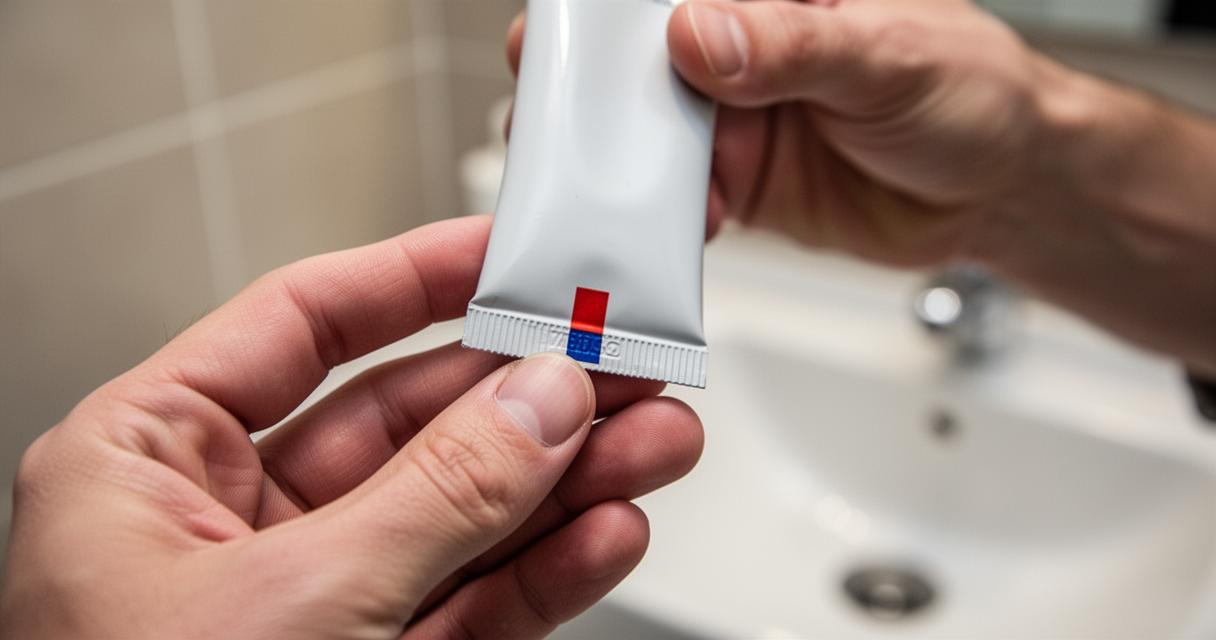
- These marks, known as ‘eye marks’ or ‘register marks’, are used by manufacturing equipment to identify where to cut and seal the packaging.
- The colour of these marks is determined solely by the need for contrast against the tube’s design to be read by optical sensors.
- To understand the true contents of a toothpaste, consumers should always read the official ingredient list on the packaging.
- Effective oral health relies on active ingredients like fluoride and choosing products tailored to specific needs such as sensitivity or gum care.
- An optimal dental routine should combine proper brushing techniques with the regular use of dental floss or interdental brushes to remove plaque effectively.
Debunking the Colour Code Myth: What Those Squares on Toothpaste Tubes Really Mean
The viral marketing legend: coloured marks as ingredient indicators
The story has circulated widely online: a green square means the toothpaste is entirely natural, a red square indicates a blend of natural and chemical ingredients, a blue square signals a mix of natural substances and medicine, and a black square supposedly reveals a purely synthetic formulation. This theory has been shared millions of times and is accepted as fact by a surprising number of people. It is, however, completely without foundation. No regulatory body, no dental association, and no toothpaste manufacturer has ever confirmed or adopted such a system for communicating ingredient information to consumers.
Industrial reality: how printing and packaging systems actually work
The coloured squares — known in the packaging industry as eye marks or register marks — serve an entirely different purpose. They are read by optical sensors during the high-speed manufacturing process to help machinery identify where to cut, fold, and seal each individual tube. The colour of the mark is chosen purely for technical reasons: it needs to contrast sufficiently with the background of the tube’s printed design so that the sensor can detect it reliably. A green tube might carry a black mark for contrast, whilst a white tube might use a red or blue mark for the same practical reason. There is absolutely no connection between the colour of this mark and the contents of the tube. When you next pick up a tube of toothpaste, you can regard that little square with the knowledge that it belongs entirely to the world of industrial printing, not to any ingredient-disclosure system.
Understanding genuine toothpaste ingredients: what actually matters for your oral health
Active ingredients in dental care products: from whitening agents to enamel protection
Rather than decoding fictional colour systems, the genuinely informative approach is to read the actual ingredient list printed on the packaging. Toothpaste formulations are regulated in the United Kingdom and must clearly declare their active and inactive components. Fluoride remains one of the most well-established active ingredients in dental care, widely recognised for its role in supporting enamel strength and helping to reduce the formation of cavities. Some products incorporate agents designed for whitening purposes, often working by reducing the surface stains left by foods, red wine, and certain beverages. It is worth noting that whitening toothpastes vary considerably in their approach — some rely on mild abrasives, whilst others include ingredients such as hydrogen peroxide in carefully regulated concentrations. Understanding these distinctions helps you make a genuinely informed choice rather than one guided by attractive packaging or viral myths.
For those concerned about plaque build-up, certain formulations include antimicrobial agents that create a less hospitable environment for the proliferation of bacteria in the mouth. Plaque, when left to accumulate, creates a terrain that is propitious to bacterial growth, which can in turn affect the gums and the overall health of your teeth. Selecting a toothpaste with appropriate active ingredients for your specific needs — whether that is sensitivity relief, gum care, or enamel protection — is far more valuable than any colour-coded shortcut.

Natural versus synthetic formulations: making informed choices for your family
The market for natural dental products has expanded considerably, and many consumers are drawn to formulations that limit synthetic additives. Natural toothpastes often use plant-derived agents as alternatives to more conventional synthetic compounds. However, it is important to approach marketing claims with a degree of healthy scepticism. The word natural on packaging is not always a guarantee of a specific formulation standard, so reading the full ingredient list remains the most reliable approach. For children in particular, the choice of toothpaste requires careful consideration of fluoride levels, which differ depending on age group, as well as the absence of ingredients that might be unsuitable for younger users. Consulting a dental professional is always a sensible step when making these selections for younger family members.
Building an effective oral hygiene routine beyond marketing claims

Proper brushing technique: manual versus electric toothbrush considerations
The technique and tools you use to brush are equally significant. Both manual and electric toothbrushes can deliver excellent results when used correctly, though electric models — particularly those with oscillating or sonic heads — can make it easier to achieve consistent plaque removal across all surfaces of the teeth. Whatever type of brush you use, the recommended duration for brushing is at least two minutes, with gentle, deliberate movements that cover the outer, inner, and chewing surfaces of each tooth, as well as the gumline. Applying too much pressure is a common mistake that can, over time, cause wear to both the enamel and the gums. When using an electric toothbrush, the replacement of brush heads at regular intervals is essential to maintaining effectiveness.
Complementary dental care: floss, interdental brushes and plaque removal strategies
Brushing alone, even with an excellent toothpaste and a well-designed brush, cannot reach every surface where plaque accumulates. Dental floss and interdental brushes are invaluable complements to the daily routine, allowing you to clean the spaces between teeth that a toothbrush simply cannot access. The elimination of plaque from these areas is a critical step in preventing gum problems and maintaining long-term dental health. Interdental brushes come in a range of sizes to suit different gap widths, and finding the right size makes the process more comfortable and effective. Incorporating these tools into your daily habits — alongside a toothpaste chosen on the basis of its actual ingredients rather than the colour of a printing registration mark — represents a genuinely responsible and well-informed approach to looking after your teeth and gums for the long term.